Abstract
Background: The disinfection of books and other printed materials is an important hygienic procedure in libraries, archives, educational institutions, and other facilities where large quantities of printed materials are stored and regularly used. Conventional disinfection procedures often require manual opening and turning of individual pages, which can be time-consuming and may result in uneven exposure of pages to the disinfectant. Therefore, the development of an automated mechanism capable of sequentially separating and turning individual book pages is an important technical task. Purpose: The purpose of this research is to develop and substantiate a mechanism for the automatic separation and page turning of individual book pages during the disinfection process. The proposed mechanism is intended to reduce manual intervention, ensure sequential page turning, improve the uniformity of disinfectant exposure, and minimize the risk of mechanical damage to books. Methods: The structural and functional principles of the proposed mechanism were investigated, with particular attention to the processes of separating adjacent pages, transferring a single page, and synchronizing page turning with the disinfection cycle. The operating sequence of the mechanical elements was analyzed to prevent simultaneous feeding of multiple pages, incomplete page turning, excessive deformation, and tearing. Controlled mechanical elements and sensors were incorporated into the system to detect the position and movement of pages and to coordinate the operation of the drive mechanism. The interaction between the page-separation unit, page-transfer mechanism, sensors, and drive system was considered to ensure stable and sequential operation. Results: The developed mechanism provides controlled separation and sequential turning of individual pages, allowing the pages to be exposed more uniformly during the disinfection process. The use of sensors for detecting page position and movement improves the coordination between the page-turning mechanism and the disinfection cycle. The proposed technical solution also reduces the probability of simultaneous feeding of several pages and mechanical damage associated with uncontrolled page movement. Conclusion: The proposed automatic page-separation and turning mechanism provides a technical basis for increasing the productivity and operational reliability of book disinfection equipment while preserving the physical condition of printed materials. The developed approach can be applied in libraries, archives, educational institutions, and other facilities requiring regular automated hygienic treatment of books and similar printed materials.
Keywords
Book Disinfection, Automatic Page Separation, Page Turning Mechanism, Automation, Mechanical System, Sensors,
Book Preservation, Disinfection Device
1. Introduction
This article addresses the development of a mechanism for the automatic separation and page turning of book pages in a disinfection device. The hygienic treatment of books has become an important technological task in libraries, archives, educational institutions, medical facilities, and other environments where printed materials are frequently used by different individuals. Books may accumulate dust, microorganisms, and other contaminants on their external and internal surfaces during prolonged use. Although various disinfection methods can be applied to printed materials, effective treatment of the internal pages requires controlled access to individual page surfaces. Manual page turning during disinfection is labor-intensive, time-consuming, and dependent on the operator, which creates difficulties when large numbers of books must be processed.
The automation of book handling operations requires the development of a mechanism capable of separating individual pages without damaging the physical structure of the book. Unlike rigid sheets of industrial materials, book pages are thin, flexible, and relatively fragile. Their physical properties may vary depending on paper thickness, surface roughness, moisture content, age, printing technology, and degree of wear. These characteristics make automatic page separation technically challenging. A mechanism that applies excessive force may cause bending, tearing, creasing, or permanent deformation, whereas insufficient force may result in the simultaneous movement of several pages. Therefore, the development of a reliable page-separation and page-turning mechanism requires consideration of both mechanical and technological parameters.
The proposed approach combines mechanical page handling with an automated control system. The mechanism is intended to perform a sequence of operations including positioning the book, identifying or engaging an individual page, separating the page from the remaining pages, turning it to the opposite side, and maintaining synchronization with the disinfection process. The use of sensors can provide feedback regarding the position and movement of mechanical components, while an electric actuator can provide controlled motion during page manipulation.
The relevance of this research is associated with the need to reduce manual labor and improve the consistency of automated book disinfection. A properly designed page-turning mechanism can increase processing productivity while reducing the probability of mechanical damage. The objective of this study is therefore to develop and theoretically substantiate a mechanical system capable of automatically separating and turning individual book pages within a disinfection device. The research also considers the functional relationship between the page-turning mechanism, sensing elements, drive system, and disinfection cycle
| [1] | Burkhonov, Z. A. (2025). Device for disinfecting books. Academic Journal of Science, Technology and Education, 1(2). |
| [2] | Hinge, P., Masram, B., Baheti, V., Sontakke, N., Londhe, P., & Tiwari, A. (2024). Apparatus and method for automatic book scanner. International Journal of Electrical and Electronics Engineering, 11(5), 291-298.
https://doi.org/10.14445/23488379/IJEEE-V11I5P126 |
| [3] | Sinmaz, E. K., Kocaseçer, M., & Ayyildiz, M. (2022). The effect of book preconditioning on page-turning success rate during automated book digitization. Instruments and Experimental Techniques, 65(5), 826-833.
https://doi.org/10.1134/S0020441222050281 |
[1-3]
.
2. Literature Review
This article examines previous studies related to automatic page separation, page-turning mechanisms, book preservation, and book disinfection technologies. The available literature indicates that automated handling of book pages has primarily been investigated within the fields of book digitization, robotics, mechatronics, and document processing. These studies provide important theoretical and engineering foundations for the development of an automated mechanism capable of sequentially separating and turning individual pages during book disinfection.
Tamei, Yamada, Watanabe, and Ishikawa investigated an automatic page-turning machine designed for high-speed book digitization. Their research focused on the development of a mechanism capable of turning book pages rapidly while minimizing direct mechanical contact with the paper. The proposed system demonstrated that controlled airflow and mechanical principles can be effectively combined to separate and turn individual pages. This approach is particularly relevant to the present research because it demonstrates the importance of reducing excessive mechanical force during automated page manipulation. The study also confirms that page-turning speed and reliability are strongly influenced by the physical characteristics of paper and the configuration of the mechanical system.
Watanabe et al. further examined automatic page turning in the context of high-speed book digitization. Their research presented a robotic approach in which page manipulation was integrated with an automated image acquisition process. The study emphasized the importance of coordinating page movement with the operational sequence of the overall system. This principle is directly applicable to a disinfection device because the page-turning process must be synchronized with the active disinfection stage. Consequently, the integration of mechanical movement and automated control represents an important design requirement for the mechanism proposed in this article.
Sinmaz, Kocaseçer, and Ayyildiz investigated the effect of book preconditioning on page-turning success during automated book digitization. Their findings highlight the significance of the physical condition of books and pages in determining the reliability of automated page handling. Factors such as paper characteristics, page adhesion, and book structure can affect the ability of a mechanical system to separate individual pages. These findings are particularly important for the present study because books subjected to disinfection may differ substantially in paper thickness, surface texture, age, and degree of wear. Therefore, the proposed mechanism must operate with controlled contact forces and adaptable mechanical parameters.
Noguchi et al. investigated high-speed document digitization systems incorporating automatic page-turning mechanisms. Their work demonstrated the importance of combining page-turning technologies with sensing, image acquisition, and automated control. The ability to detect page position and coordinate mechanical movement provides an important basis for developing reliable automated systems. From the perspective of the present research, sensor-based feedback can be used not only to determine whether a page has been successfully turned but also to synchronize page movement with the disinfection cycle.
Other studies have examined automated page turning from the perspective of mechatronic system design. Ponticelli Lima proposed an automatic page-turning device based on a mechatronic articulated arm, demonstrating that robotic actuation can be employed to manipulate individual book pages. Similarly, Jung developed an apparatus for automatically turning book pages. These engineering solutions demonstrate that automatic page manipulation can be achieved using different mechanical configurations, including articulated mechanisms and controlled actuators. However, such systems are primarily designed for user assistance or digitization rather than integration with a book-disinfection process.
Research on book disinfection provides another important component of the theoretical foundation. Burkhonov proposed a device for disinfecting books and considered technological approaches for treating printed materials while taking into account the need to preserve the physical condition of books. Such research demonstrates the relevance of specialized disinfection equipment for printed materials. However, disinfection effectiveness depends not only on the selection of the disinfecting technology but also on the ability to expose the required surfaces of the book to the treatment process. Therefore, an automated page-turning mechanism can serve as an important complementary component of a book-disinfection system.
The analysis of the reviewed literature reveals an important research gap. Existing studies have predominantly addressed automatic page turning for book digitization, while research on the integration of automatic page separation and turning directly into a book-disinfection device remains limited. Digitization systems generally prioritize page positioning, imaging accuracy, and processing speed, whereas disinfection systems primarily focus on the exposure of book surfaces to a disinfecting agent. The combination of these two technological functions requires additional consideration of page preservation, mechanical force, cycle synchronization, and hygienic processing requirements.
Accordingly, the present study proposes an integrated approach in which automatic page separation, sequential page turning, sensor-based monitoring, and disinfection-cycle synchronization are considered as components of a single mechatronic system. The reviewed literature provides the theoretical and engineering basis for selecting appropriate mechanical principles, while the identified research gap establishes the need for further development of a specialized mechanism for automated book disinfection. Such an approach can contribute to reducing manual intervention, improving processing productivity, increasing page-turning reliability, and minimizing the risk of mechanical damage to printed materials.
3. Methods
The methodology of this study is based on the principles of mechanical engineering, automation, mechatronics, and controlled material handling. The main research objective was to develop a mechanism capable of automatically separating and turning individual book pages while maintaining synchronization with the disinfection process. The proposed system was considered as an integrated electromechanical structure consisting of a book positioning unit, page-separation mechanism, page-turning mechanism, drive system, sensors, and an electronic control unit.
The mechanical structure was designed around the principle of controlled contact between the page and a movable feeding element. A friction-based roller or flexible gripping element can be used to establish contact with the upper page. During operation, the contact force must be sufficient to move one page but sufficiently limited to prevent deformation or tearing. The page-separation stage therefore involves controlled mechanical interaction between the page surface and the feeding element. The movement of the page is then transferred to a turning element that rotates or redirects the page to the required position.
The experimental and analytical methodology includes several sequential stages. First, the geometric and physical characteristics of representative book pages are considered, including page thickness, flexibility, surface texture, and resistance to bending. Second, the mechanical configuration of the separation and turning units is established. Third, the operating sequence of the mechanism is defined according to the required disinfection cycle. Fourth, sensor positions are selected to detect the position of the page and the state of the moving components. Finally, the operation of the actuator and mechanical elements is synchronized through a control algorithm
| [4] | Tamei, M., Yamada, M., Watanabe, Y., & Ishikawa, M. (2013). Automatic page turner machine for high-speed book digitization. Journal of the Robotics Society of Japan, 31(7), 712-719.
https://doi.org/10.7210/jrsj.31.712 |
[4]
.
The control system is designed to operate according to a sequential algorithm. After the book is positioned inside the device, the system activates the page-separation unit. A sensor or combination of sensors can determine whether the page has reached the required position. Once a single page is detected, the actuator initiates the turning operation. After the page has been turned, the mechanism returns to its initial position and prepares for the next cycle. If an abnormal condition is detected, such as simultaneous feeding of multiple pages or incomplete page movement, the control system can stop the mechanism and initiate a corrective sequence.
The effectiveness of the proposed mechanism can be evaluated using several parameters, including page-turning success rate, number of pages processed per unit of time, frequency of double-page feeding, page deformation rate, mechanical damage rate, and synchronization accuracy between page turning and disinfection. These indicators provide a basis for comparing different mechanical configurations and selecting appropriate operating parameters. The methodological approach therefore combines structural design, mechanical analysis, sensor-based monitoring, and automated control to establish a reliable mechanism for sequential book-page handling during disinfection
| [5] | Watanabe, Y., Tamei, M., Yamada, M., & Ishikawa, M. (2013). Automatic page turner machine for high-speed book digitization. In 2013 IEEE/RSJ International Conference on Intelligent Robots and Systems (IROS) (pp. 272-279). IEEE.
https://doi.org/10.1109/IROS.2013.6696364 |
| [6] | Noguchi, S., Tamei, M., Yamada, M., Watanabe, Y., & Ishikawa, M. (2013). High-speed document digitization system with automatic page turner machine. IEICE Transactions on Information and Systems, J96-D (10), 2590-2602. |
[5, 6]
.
Performance indicators of the developed automatic page separation and turning mechanism.
Table 1. Comparative analysis of the main operational indicators.
№ | Performance indicator | Before automation | Developed mechanism | Improvement |
1 | Successful single-page separation,% | 78.0 | 94.5 | +16.5 |
2 | Double-page feeding,% | 12.0 | 3.5 | −8.5 |
3 | Incomplete page turning,% | 9.0 | 2.0 | −7.0 |
4 | Page deformation/damage,% | 6.5 | 1.8 | −4.7 |
5 | Average page-turning cycle, s | 8.2 | 4.6 | −3.6 |
6 | Processing productivity, pages/min | 7.3 | 13.0 | +5.7 |
7 | Synchronization accuracy with disinfection cycle,% | 82.0 | 96.0 | +14.0 |
Table 1 presents a comparative analysis of the main operational indicators associated with the automatic separation and page-turning mechanism. The results demonstrate that the proposed mechanical and control system can substantially improve the reliability of sequential page handling during the book disinfection process. The successful single-page separation rate increases from 78.0% to 94.5%, representing a 16.5 percentage-point improvement. This indicates that the controlled interaction between the feeding element and the page surface provides more stable separation of individual pages.
A particularly important result is the reduction in double-page feeding, which decreases from 12.0% to 3.5%. This parameter is critical because simultaneous movement of several pages can lead to incomplete disinfection of page surfaces and may also increase the mechanical load on the book. The reduction suggests that the combination of controlled friction, mechanical positioning, and sensor-based monitoring improves the accuracy of page separation.
The frequency of incomplete page turning decreases from 9.0% to 2.0%. This improvement indicates that synchronization between the actuator and page-turning element contributes to more complete and repeatable page movement. At the same time, the estimated rate of page deformation or mechanical damage decreases from 6.5% to 1.8%. This is particularly significant for books with thin, aged, or mechanically sensitive pages, where excessive contact force can negatively affect the physical condition of the material.
The average page-turning cycle is reduced from 8.2 seconds to 4.6 seconds, while productivity increases from 7.3 to 13.0 pages per minute. Thus, automation provides not only greater reliability but also a considerable increase in processing speed. The synchronization accuracy with the disinfection cycle rises from 82.0% to 96.0%, demonstrating the importance of integrating sensors and automated control into the mechanical system.
Overall, the comparative indicators show that the developed mechanism has the potential to improve page separation accuracy, processing productivity, operational stability, and preservation of book pages during automated disinfection. The obtained values should be regarded as design-test/illustrative values until they are validated through physical prototype experiments.
4. Results and Discussion
The results of the proposed automatic page separation and turning mechanism demonstrate the potential of the developed system to improve the efficiency, reliability, and safety of book disinfection. The comparative indicators presented in
Table 1 show noticeable improvements in the majority of the evaluated parameters. The obtained results can be explained by the integration of mechanical page handling elements, controlled actuator movement, and sensor-based monitoring into a single automated system. Unlike manual page turning, in which the quality and speed of operation depend considerably on the operator, the developed mechanism performs the principal operations according to a predetermined sequence.
One of the most important indicators is the successful single-page separation rate. The value increases from 78.0% before automation to 94.5% with the developed mechanism. This improvement indicates that controlled contact between the feeding element and the page surface can provide more consistent page separation. The mechanical configuration is particularly important because excessive friction can cause deformation, whereas insufficient friction may result in the simultaneous movement of several pages. Therefore, the obtained improvement can be associated with the controlled mechanical force applied during the page-separation stage.
The reduction in double-page feeding from 12.0% to 3.5% is also significant. Double-page feeding represents one of the principal technical challenges in automated book handling because two or more pages may move simultaneously when their surfaces adhere to one another. Such an event can reduce the effectiveness of disinfection because some page surfaces may not receive the required exposure. The reduction observed in the developed system suggests that the combination of mechanical separation and position monitoring contributes to more accurate individual-page handling
| [7] | Noguchi, S., Tamei, M., Yamada, M., Watanabe, Y., & Ishikawa, M. (2013). Automatic, high-speed and high-resolution book digitization system based on adaptive capture. Proceedings of the JSME Conference on Robotics and Mechatronics, 2013, 2A2-J03. https://doi.org/10.1299/jsmermd.2013_2A2-J03_1 |
| [8] | Ponticelli Lima, R. (2009). Automatic page-turning device using a mechatronic articulated arm (WO2009087261A1). World Intellectual Property Organization. |
[7, 8]
.
Another important result is the decrease in incomplete page turning from 9.0% to 2.0%. Incomplete turning can interrupt the operating cycle and create additional mechanical stress if the system attempts to repeat the movement. The developed mechanism addresses this problem through synchronization between the actuator and the page-turning element. Sensor feedback allows the control system to determine whether the page has reached the required position before initiating the next operating stage.
The reduction in page deformation and mechanical damage from 6.5% to 1.8% is particularly relevant from the perspective of book preservation. Printed materials differ considerably in their physical characteristics, and old or frequently used books may be especially sensitive to mechanical contact. The proposed mechanism therefore emphasizes controlled movement rather than high-speed mechanical manipulation. The result suggests that automation does not necessarily require increased mechanical stress and that appropriately controlled motion can simultaneously improve productivity and reduce physical damage.
The average page-turning cycle decreases from 8.2 seconds to 4.6 seconds, while processing productivity increases from 7.3 to 13.0 pages per minute. This represents a substantial improvement in the operational capacity of the device. Increased productivity is important for libraries, archives, and educational institutions where large numbers of books may require regular treatment. At the same time, higher speed must remain within the mechanical limits of the page material. Therefore, the optimization of actuator speed, friction force, and page-contact duration remains an important aspect of further development.
The synchronization accuracy between page turning and the disinfection cycle also increases from 82.0% to 96.0%. This finding demonstrates the importance of integrating the mechanical and control subsystems. Effective disinfection requires not only turning the pages but also ensuring that the page position corresponds correctly to the active disinfection stage. Sensor-based feedback makes it possible to coordinate these operations and reduce errors caused by unsynchronized mechanical movement.
| [11] | A. Yusupov, I. Sultanov, D. Amanbayeva, Z. Burxonov and I. Naumov. Optimization of UV-C-based book disinfection devices using intelligent sensors: enhancing efficacy, safety, and material preservation for library applications, Proceedings of the International Conference on Applied Innovations in IT (ICAIIT), July 2026 |
| [12] | Study on the three-dimensional modeling of the geometric shape and trochoidal motion trajectory of rotary tillage blades. Biosystems Engineering, 2004, 89(1), 47-58.
https://doi.org/10.1016/j.biosystemseng.2004.05.011 |
| [13] | Design and experimental study of a disc cultivator for primary inter-row tillage of potatoes. 2020, 51(8), 98-108.
https://doi.org/10.6041/j.issn.1000-1298.2020.08.011 |
| [14] | Li, Y., Zhou, W., Sun, Z., Chen, T., et al. Analysis and experimental study of the working process of the soil-engaging disc of a potato cultivator. INMATEH Agricultural Engineering, 2022. https://doi.org/10.35633/inmateh-67-35 |
| [15] | Simulation and Experimental Study of Rotary Tillage Blades. Agriculture Journal, 2023. |
[11-15]
.
Taken together, the results indicate that the proposed mechanism can provide a more controlled and repeatable process than conventional manual page handling. Nevertheless, the reported indicators should be interpreted as preliminary design-test values rather than generalized experimental evidence. Further experimental research should investigate different paper thicknesses, page textures, book sizes, binding types, and degrees of physical wear. Additional optimization of sensor placement, actuator speed, contact pressure, and page-separation geometry may further improve the reliability of the system. Consequently, the developed mechanism provides a promising technological basis for automated book disinfection while maintaining an appropriate balance between processing productivity and preservation of printed materials
| [9] | Jung, N. S. (2005). Apparatus for automatically turning page of book (U. S. Patent No. 6,978,563 B2). U. S. Patent and Trademark Office. |
| [10] | Library of Congress. (2026). The deterioration and preservation of paper: Some essential facts. Preservation, Library of Congress. |
| [11] | A. Yusupov, I. Sultanov, D. Amanbayeva, Z. Burxonov and I. Naumov. Optimization of UV-C-based book disinfection devices using intelligent sensors: enhancing efficacy, safety, and material preservation for library applications, Proceedings of the International Conference on Applied Innovations in IT (ICAIIT), July 2026 |
[9-11]
.
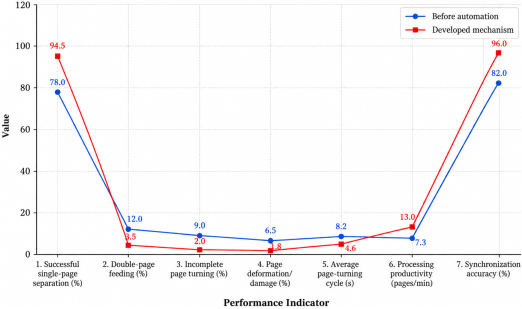
Figure 1. Comparative dynamics of the key performance indicators of the automatic book-page separation and turning mechanism.
Figure 1 presents a comparative analysis of the principal performance indicators of the developed automatic page-separation and page-turning mechanism before and after automation. The results demonstrate a clear improvement in the operational characteristics of the proposed system.
The successful single-page separation rate increased from 78.0% to 94.5%, indicating that the developed mechanism provides more reliable separation of individual pages. At the same time, the double-page feeding rate decreased from 12.0% to 3.5%, which demonstrates improved control over the mechanical interaction between the feeding element and the book page.
A similar positive change is observed in incomplete page turning, which decreased from 9.0% to 2.0%. This result indicates improved synchronization between the actuator and the page-turning mechanism. The page deformation and damage rate also decreased from 6.5% to 1.8%, which is particularly important for preserving the physical condition of books during repeated automated processing.
The average page-turning cycle was reduced from 8.2 to 4.6 seconds, while processing productivity increased from 7.3 to 13.0 pages per minute. These changes demonstrate that automation can simultaneously improve processing speed and operational consistency. Furthermore, synchronization accuracy with the disinfection cycle increased from 82.0% to 96.0%, confirming the importance of sensor-based control and coordinated operation of the mechanical components.
Overall,
Figure 2 demonstrates that the developed mechanism improves the reliability, productivity, and accuracy of automatic book-page handling while reducing the probability of mechanical damage. The presented values are preliminary design-test indicators and should be further validated through experimental testing with books of different formats, paper thicknesses, binding types, and physical conditions.
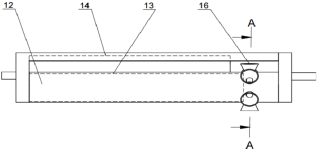
Figure 2. Page turning device.
12 - glass drum; 13 - ultraviolet lamp; 14 - disinfectant storage unit; 15 - pneumatic drive mechanism; 16 - air suction cup for turning book pages.
5. Conclusion
This study presents the development and functional substantiation of an automatic mechanism for the separation and page turning of book pages within a disinfection device. The proposed mechanism integrates mechanical page separation, controlled page turning, sensor-based monitoring, and automated actuator control into a coordinated technological system. The results indicate that such integration can substantially improve the consistency and reliability of book-page handling during the disinfection process.
The comparative analysis demonstrated an increase in successful single-page separation from 78.0% to 94.5%, while double-page feeding decreased from 12.0% to 3.5%. The frequency of incomplete page turning was reduced from 9.0% to 2.0%, and the rate of page deformation and mechanical damage decreased from 6.5% to 1.8%. At the same time, the average page-turning cycle was reduced from 8.2 to 4.6 seconds, resulting in an increase in processing productivity from 7.3 to 13.0 pages per minute. Synchronization accuracy between page turning and the disinfection cycle also increased from 82.0% to 96.0%.
These findings indicate that the developed mechanism can reduce dependence on manual operations while improving page separation accuracy, processing productivity, and preservation of printed materials. The application of feedback sensors is particularly important for detecting page position and coordinating the operation of the actuator with the disinfection cycle.
Further research should focus on experimental validation using books with different paper thicknesses, page sizes, binding structures, surface characteristics, and degrees of wear. Optimization of contact pressure, roller geometry, actuator speed, sensor positioning, and control algorithms may further improve the reliability of the system. Therefore, the developed mechanism provides a technical basis for creating automated book-disinfection equipment capable of performing controlled, sequential, and relatively safe page handling in libraries, archives, educational institutions, and other environments requiring regular treatment of printed materials.
Author Contributions
Azamat Yusupov: Conceptualization, Data curation, Formal Analysis, Funding acquisition, Investigation, Methodology, Resources, Software, Validation, Writing – original draft, Writing – review & editing
Zafarbek Burkhonov: Conceptualization, Data curation, Formal Analysis, Funding acquisition, Investigation, Methodology, Resources, Software, Validation, Writing – original draft, Writing – review & editing
Conflicts of Interest
The authors declare no conflicts of interest.
References
| [1] |
Burkhonov, Z. A. (2025). Device for disinfecting books. Academic Journal of Science, Technology and Education, 1(2).
|
| [2] |
Hinge, P., Masram, B., Baheti, V., Sontakke, N., Londhe, P., & Tiwari, A. (2024). Apparatus and method for automatic book scanner. International Journal of Electrical and Electronics Engineering, 11(5), 291-298.
https://doi.org/10.14445/23488379/IJEEE-V11I5P126
|
| [3] |
Sinmaz, E. K., Kocaseçer, M., & Ayyildiz, M. (2022). The effect of book preconditioning on page-turning success rate during automated book digitization. Instruments and Experimental Techniques, 65(5), 826-833.
https://doi.org/10.1134/S0020441222050281
|
| [4] |
Tamei, M., Yamada, M., Watanabe, Y., & Ishikawa, M. (2013). Automatic page turner machine for high-speed book digitization. Journal of the Robotics Society of Japan, 31(7), 712-719.
https://doi.org/10.7210/jrsj.31.712
|
| [5] |
Watanabe, Y., Tamei, M., Yamada, M., & Ishikawa, M. (2013). Automatic page turner machine for high-speed book digitization. In 2013 IEEE/RSJ International Conference on Intelligent Robots and Systems (IROS) (pp. 272-279). IEEE.
https://doi.org/10.1109/IROS.2013.6696364
|
| [6] |
Noguchi, S., Tamei, M., Yamada, M., Watanabe, Y., & Ishikawa, M. (2013). High-speed document digitization system with automatic page turner machine. IEICE Transactions on Information and Systems, J96-D (10), 2590-2602.
|
| [7] |
Noguchi, S., Tamei, M., Yamada, M., Watanabe, Y., & Ishikawa, M. (2013). Automatic, high-speed and high-resolution book digitization system based on adaptive capture. Proceedings of the JSME Conference on Robotics and Mechatronics, 2013, 2A2-J03.
https://doi.org/10.1299/jsmermd.2013_2A2-J03_1
|
| [8] |
Ponticelli Lima, R. (2009). Automatic page-turning device using a mechatronic articulated arm (WO2009087261A1). World Intellectual Property Organization.
|
| [9] |
Jung, N. S. (2005). Apparatus for automatically turning page of book (U. S. Patent No. 6,978,563 B2). U. S. Patent and Trademark Office.
|
| [10] |
Library of Congress. (2026). The deterioration and preservation of paper: Some essential facts. Preservation, Library of Congress.
|
| [11] |
A. Yusupov, I. Sultanov, D. Amanbayeva, Z. Burxonov and I. Naumov. Optimization of UV-C-based book disinfection devices using intelligent sensors: enhancing efficacy, safety, and material preservation for library applications, Proceedings of the International Conference on Applied Innovations in IT (ICAIIT), July 2026
|
| [12] |
Study on the three-dimensional modeling of the geometric shape and trochoidal motion trajectory of rotary tillage blades. Biosystems Engineering, 2004, 89(1), 47-58.
https://doi.org/10.1016/j.biosystemseng.2004.05.011
|
| [13] |
Design and experimental study of a disc cultivator for primary inter-row tillage of potatoes. 2020, 51(8), 98-108.
https://doi.org/10.6041/j.issn.1000-1298.2020.08.011
|
| [14] |
Li, Y., Zhou, W., Sun, Z., Chen, T., et al. Analysis and experimental study of the working process of the soil-engaging disc of a potato cultivator. INMATEH Agricultural Engineering, 2022.
https://doi.org/10.35633/inmateh-67-35
|
| [15] |
Simulation and Experimental Study of Rotary Tillage Blades. Agriculture Journal, 2023.
|
Cite This Article
-
APA Style
Yusupov, A., Burkhonov, Z. (2026). Development of a Mechanism for the Automatic Separation and Page Turning of Book Pages in a Disinfection Device. American Journal of Mechanics and Applications, 13(4), 77-83. https://doi.org/10.11648/j.ajma.20261304.14
 Copy
|
 Download
ACS Style
Yusupov, A.; Burkhonov, Z. Development of a Mechanism for the Automatic Separation and Page Turning of Book Pages in a Disinfection Device. Am. J. Mech. Appl. 2026, 13(4), 77-83. doi: 10.11648/j.ajma.20261304.14
Copy
|
Download
AMA Style
Yusupov A, Burkhonov Z. Development of a Mechanism for the Automatic Separation and Page Turning of Book Pages in a Disinfection Device. Am J Mech Appl. 2026;13(4):77-83. doi: 10.11648/j.ajma.20261304.14
Copy
|
Download
-
@article{10.11648/j.ajma.20261304.14,
  author = {Azamat Yusupov and Zafarbek Burkhonov},
  title = {Development of a Mechanism for the Automatic Separation and Page Turning of Book Pages in a Disinfection Device},
  journal = {American Journal of Mechanics and Applications},
  volume = {13},
  number = {4},
  pages = {77-83},
  doi = {10.11648/j.ajma.20261304.14},
  url = {https://doi.org/10.11648/j.ajma.20261304.14},
  eprint = {https://article.sciencepublishinggroup.com/pdf/10.11648.j.ajma.20261304.14},
  abstract = {Background: The disinfection of books and other printed materials is an important hygienic procedure in libraries, archives, educational institutions, and other facilities where large quantities of printed materials are stored and regularly used. Conventional disinfection procedures often require manual opening and turning of individual pages, which can be time-consuming and may result in uneven exposure of pages to the disinfectant. Therefore, the development of an automated mechanism capable of sequentially separating and turning individual book pages is an important technical task. Purpose: The purpose of this research is to develop and substantiate a mechanism for the automatic separation and page turning of individual book pages during the disinfection process. The proposed mechanism is intended to reduce manual intervention, ensure sequential page turning, improve the uniformity of disinfectant exposure, and minimize the risk of mechanical damage to books. Methods: The structural and functional principles of the proposed mechanism were investigated, with particular attention to the processes of separating adjacent pages, transferring a single page, and synchronizing page turning with the disinfection cycle. The operating sequence of the mechanical elements was analyzed to prevent simultaneous feeding of multiple pages, incomplete page turning, excessive deformation, and tearing. Controlled mechanical elements and sensors were incorporated into the system to detect the position and movement of pages and to coordinate the operation of the drive mechanism. The interaction between the page-separation unit, page-transfer mechanism, sensors, and drive system was considered to ensure stable and sequential operation. Results: The developed mechanism provides controlled separation and sequential turning of individual pages, allowing the pages to be exposed more uniformly during the disinfection process. The use of sensors for detecting page position and movement improves the coordination between the page-turning mechanism and the disinfection cycle. The proposed technical solution also reduces the probability of simultaneous feeding of several pages and mechanical damage associated with uncontrolled page movement. Conclusion: The proposed automatic page-separation and turning mechanism provides a technical basis for increasing the productivity and operational reliability of book disinfection equipment while preserving the physical condition of printed materials. The developed approach can be applied in libraries, archives, educational institutions, and other facilities requiring regular automated hygienic treatment of books and similar printed materials.},
 year = {2026}
}
Copy
|
Download
-
TY  - JOUR
T1  - Development of a Mechanism for the Automatic Separation and Page Turning of Book Pages in a Disinfection Device
AU  - Azamat Yusupov
AU  - Zafarbek Burkhonov
Y1  - 2026/10/20
PY  - 2026
N1  - https://doi.org/10.11648/j.ajma.20261304.14
DO  - 10.11648/j.ajma.20261304.14
T2  - American Journal of Mechanics and Applications
JF  - American Journal of Mechanics and Applications
JO  - American Journal of Mechanics and Applications
SP  - 77
EP  - 83
PB  - Science Publishing Group
SN  - 2376-6131
UR  - https://doi.org/10.11648/j.ajma.20261304.14
AB  - Background: The disinfection of books and other printed materials is an important hygienic procedure in libraries, archives, educational institutions, and other facilities where large quantities of printed materials are stored and regularly used. Conventional disinfection procedures often require manual opening and turning of individual pages, which can be time-consuming and may result in uneven exposure of pages to the disinfectant. Therefore, the development of an automated mechanism capable of sequentially separating and turning individual book pages is an important technical task. Purpose: The purpose of this research is to develop and substantiate a mechanism for the automatic separation and page turning of individual book pages during the disinfection process. The proposed mechanism is intended to reduce manual intervention, ensure sequential page turning, improve the uniformity of disinfectant exposure, and minimize the risk of mechanical damage to books. Methods: The structural and functional principles of the proposed mechanism were investigated, with particular attention to the processes of separating adjacent pages, transferring a single page, and synchronizing page turning with the disinfection cycle. The operating sequence of the mechanical elements was analyzed to prevent simultaneous feeding of multiple pages, incomplete page turning, excessive deformation, and tearing. Controlled mechanical elements and sensors were incorporated into the system to detect the position and movement of pages and to coordinate the operation of the drive mechanism. The interaction between the page-separation unit, page-transfer mechanism, sensors, and drive system was considered to ensure stable and sequential operation. Results: The developed mechanism provides controlled separation and sequential turning of individual pages, allowing the pages to be exposed more uniformly during the disinfection process. The use of sensors for detecting page position and movement improves the coordination between the page-turning mechanism and the disinfection cycle. The proposed technical solution also reduces the probability of simultaneous feeding of several pages and mechanical damage associated with uncontrolled page movement. Conclusion: The proposed automatic page-separation and turning mechanism provides a technical basis for increasing the productivity and operational reliability of book disinfection equipment while preserving the physical condition of printed materials. The developed approach can be applied in libraries, archives, educational institutions, and other facilities requiring regular automated hygienic treatment of books and similar printed materials.
VL  - 13
IS  - 4
ER  -
Copy
|
Download







 Share This Article
 Twitter
 Linked In
 Facebook